How human intelligence actually works
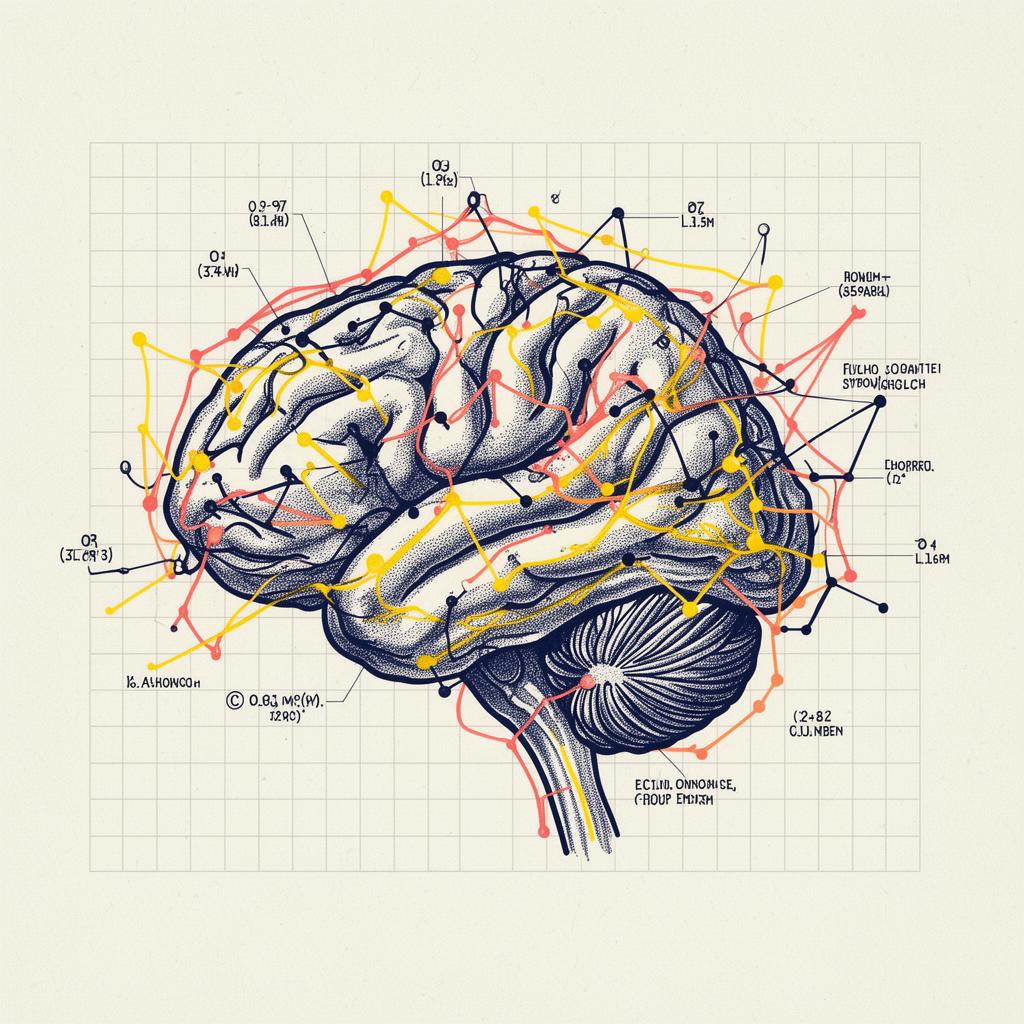
Before comparing minds to machines, it helps to understand what we are comparing. These are the cognitive systems neuroscience and psychology have mapped most clearly.
Working Memory
A small, fast scratchpad - roughly four chunks of information held active for seconds. It bottlenecks reasoning, learning, and language comprehension.
Attention
The selective amplification of relevant signals and suppression of distractors. Spatial, temporal, feature-based, and executive attention rely on overlapping but distinct networks.
Learning
Synaptic change driven by experience. Reinforcement, statistical, and supervised learning all have neural analogues - and limits humans share with machines.
Executive Function
The prefrontal control system: planning, inhibition, task switching, and goal maintenance. The substrate of self-directed cognition.
Creativity
Recombination of stored knowledge under loose constraints, often involving default-mode network activity, analogy, and the deliberate violation of expectation.
Consciousness
Subjective experience - what it is like to be a system. Its neural correlates are partly mapped; its computational nature remains an open scientific question.
Decision Making
An interplay of value estimation, uncertainty, time horizons, emotion, and social context - never the dispassionate optimiser of textbook models.
Emotion
Not the opposite of reason. Affect tags experiences with value, guides attention, and is integral to learning and judgment.
Cognitive Flexibility
The ability to update beliefs, switch strategies, and revise mental models in response to new information - a defining feature of general intelligence.
Metacognition
Thinking about thinking. Monitoring one's own knowledge, calibration, and confidence - a capability current AI systems are only beginning to acquire.
How psychologists actually measure intelligence
Modern intelligence research distinguishes fluid intelligence - the ability to reason about novel problems, formalised by Raymond Cattell in 1963 - from crystallized intelligence, the accumulated knowledge and verbal skill built through human learning. Both load onto the general factor of intelligence (Spearman's g), and both decline and grow on different curves across the lifespan, with crystallized scores typically peaking in later adulthood.
The cognitive systems above interact. Working memory capacity constrains problem solving and decision making; attention gates what reaches long term memory; executive function coordinates goals and cognitive flexibility. Together they produce the cognitive performanceand adaptive behaviour we summarise with the word "intelligence" - and they are the benchmarks against which artificial intelligence and any future general intelligence systems are ultimately judged.
Cognitive science, cognitive psychology, and cognitive neuroscience approach these systems from different angles - behavioural experiments, computational models, and direct measurement of brain function with fMRI, EEG, and MEG. The convergence of those methods is what lets us speak with any precision about human cognitionat all.